
Activ Rescue
Dispatch intelligence for the moments that cannot wait.
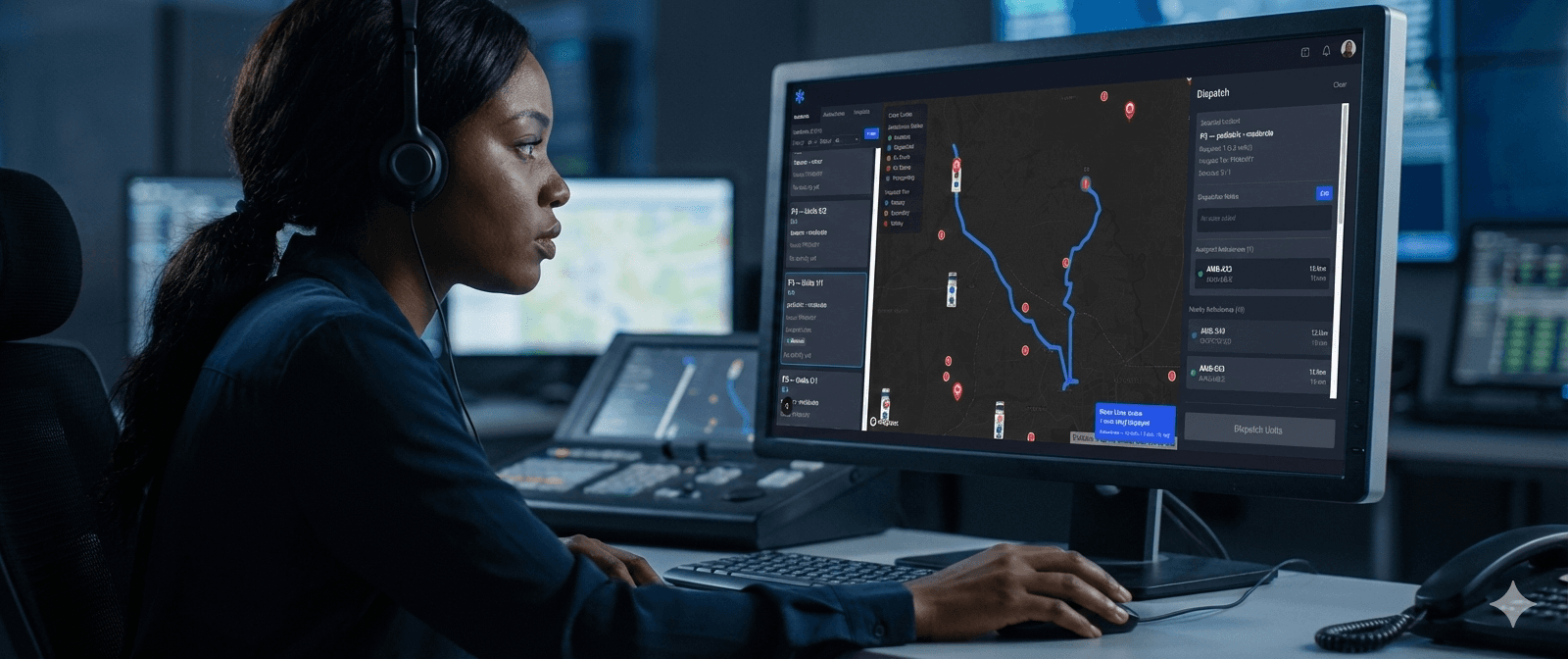
One EMS platform: Dispatch Console, ActivCAD for crews, and Hospital Console — from first tone to patient transfer. Built for agencies comparing legacy CAD suites who need a modern stack they can defend in procurement and operate on day one.
- HIPAA-ready architecture
- Live fleet & incident updates
- Municipal, regional & hospital use
- Pilot & annual agency packs available
One platform
Activ Rescue connects dispatch, field, and hospital in one system.
No separate CAD, MDT, and hospital notification vendors to integrate — one operational picture from the tone to transfer of care.
Dispatch Console
Command center
Incident queue, live map, protocol-aware unit assignment, and supervisor oversight.
- Multi-unit dispatch with live AVL
- Supervisor override with audit trail
- SignalR updates across the board
ActivCAD
Field crews
Native mobile app for dispatch acceptance, navigation, ePCR, and offline sync.
- iOS & Android native apps
- Offline ePCR and status sync
- Push dispatch notifications
Hospital Console
Receiving facilities
Pre-arrival summaries, inbound tracking, specialty alerts, and handoff documentation.
- STEMI, stroke, trauma routing
- Live ETA countdowns
- Structured handoff records
At a glance
What evaluators look for first — and where Activ Rescue answers.
3 → 1
Surfaces unified
Dispatch, field, and hospital on one data model — not three vendors to integrate.
<1s
Live updates
SignalR pushes unit status, ETAs, and incident changes to every connected screen.
Offline
ActivCAD sync
Crews accept calls, navigate, and document when LTE drops — data syncs on reconnect.
Pilot
Then annual packs
90-day fixed pilot → flat agency packs by fleet size. Local currency and CapEx options available.
Research by role
Start with the questions your team actually asks.
Select your lane — each path highlights typical pain points, what to validate in a demo, and where to dig deeper on this site.
You run the board — coverage, ETAs, and escalation are on you.
Common pain points
- Legacy CAD refresh cycles hide unit movement until it is too late
- Hospital notification is a phone call, not a shared system of record
- Supervisor overrides are hard to reconstruct during QA reviews
What to validate
- Live map with sub-second unit status
- Protocol-aware recommendations with override audit
- Incident queue built for high-volume shifts
The operating system for EMS
One command fabric from the call center to the curb.
Activ Rescue connects dispatchers, paramedics, and hospitals on a shared operational picture — so seconds are spent on care, not coordination. Evaluators can trace a single incident from intake through handoff without switching mental models or vendor contracts.
01
Intelligent dispatch
Allocate the right unit with protocol context, traffic, capability, and supervisor override built in.
The command map, incident queue, and recommendation engine share one view — so dispatchers assign with confidence and supervisors can reconstruct every decision.
02
Live fleet command
See every unit, ETA, and coverage gap update as the scene changes — not after the next refresh.
SignalR pushes status changes to every connected screen in under a second. Coverage gaps and mutual-aid posture are visible before the board falls behind the radio.
03
Hospital-ready handoff
Push clinical summaries before arrival so receiving teams prepare, not scramble.
Structured pre-arrival data — chief complaint, vitals trend, specialty flags — reaches Hospital Console with a live ETA, not a phone call at the ambulance bay.
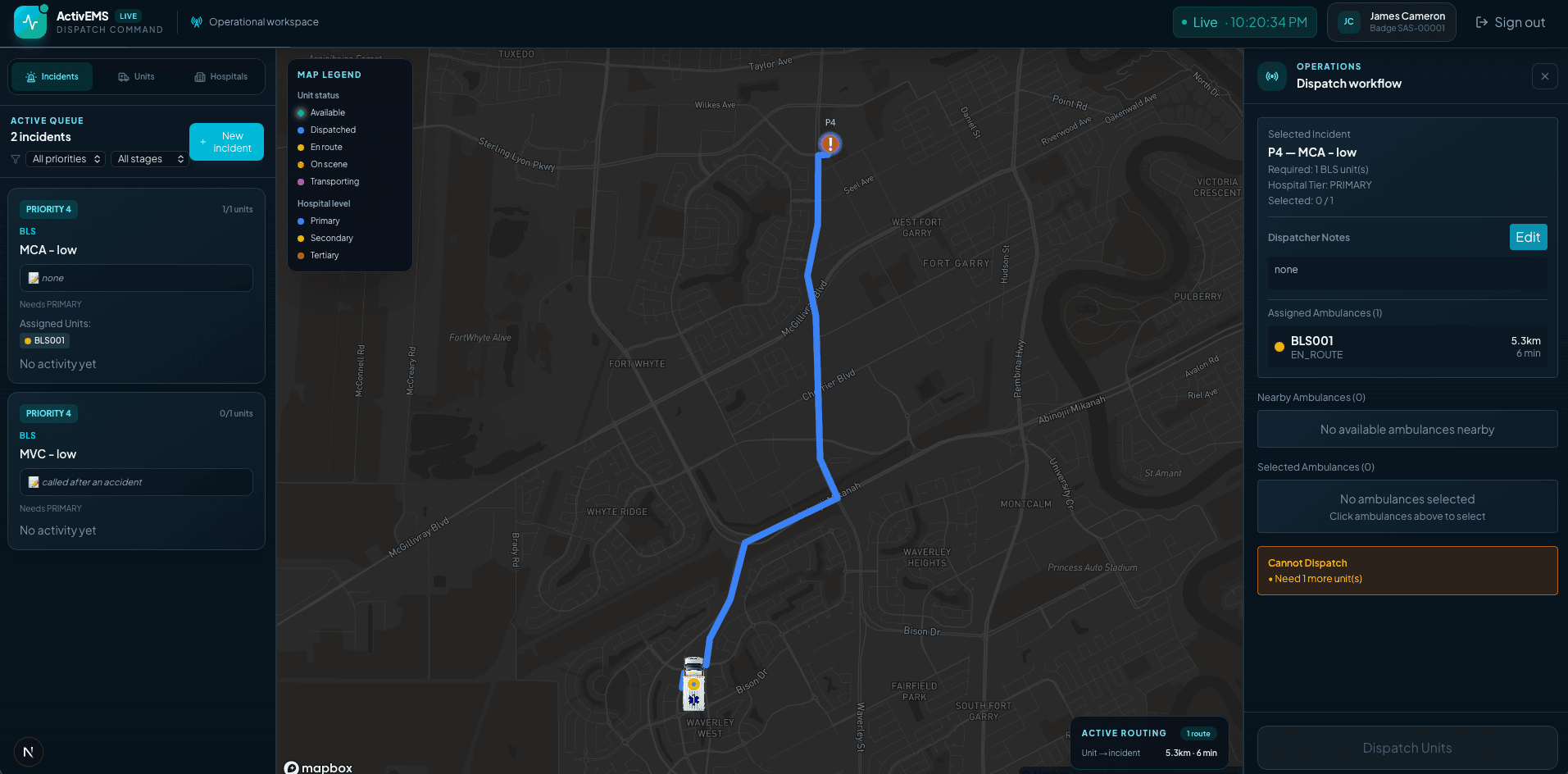
Dispatch console
Situational awareness that moves at the speed of the call.
Incident queue, live AVL, route visualization, and supervisor tools on one screen — built for high-volume shifts and mutual-aid coordination.
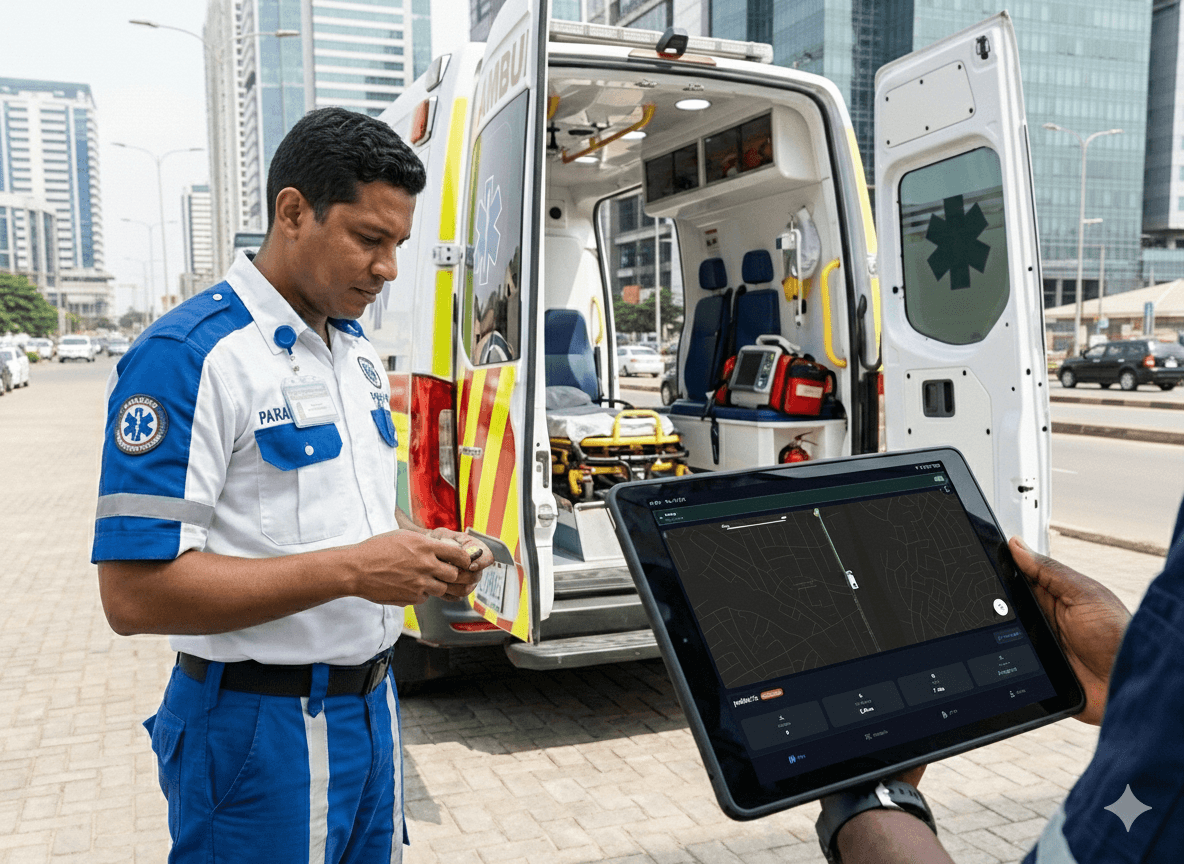
ActivCAD · Field
Offline-first tools for crews who leave coverage behind.
Native mobile workflows for dispatch acceptance, navigation, ePCR, and telemetry — designed to keep working when the network does not. Crews update status from the scene; command sees it without a radio check.
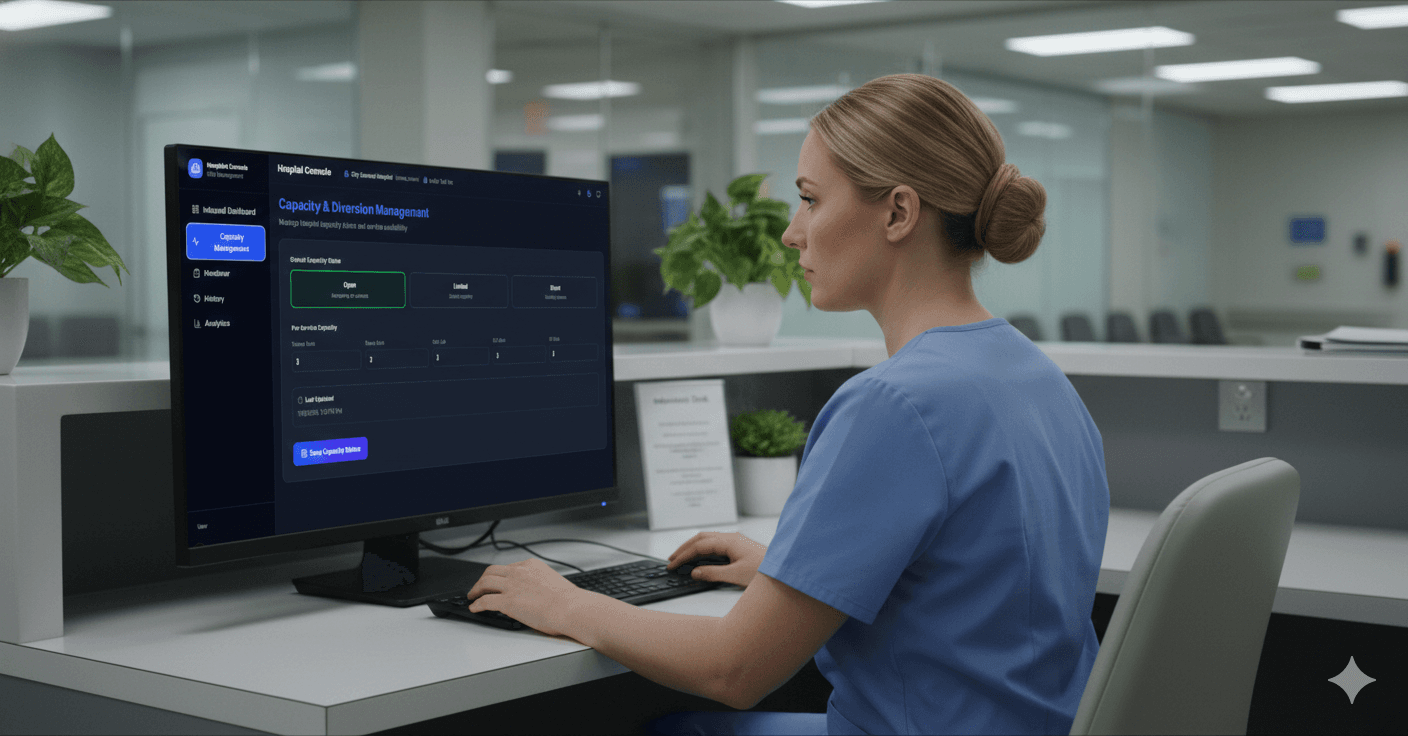
Hospital console
Pre-arrival clarity for the teams waiting at the doors.
Specialty alerts, live ETAs, and structured handoff so receiving facilities are ready before the stretcher hits the bay. Clinical and operational staff share one inbound picture — not parallel phone trees.
End-to-end workflow
Follow one call from tone to transfer of care.
Buyers often evaluate CAD, mobile, and hospital tools separately. Activ Rescue is designed around the full incident arc — so you can stress-test one workflow, not three integrations.
- 01
Call intake & triage
Incidents enter the dispatch queue with location, chief complaint, and protocol context. Supervisors see coverage and pending volume at a glance.
Dispatch · QA
- 02
Unit recommendation
Rules engine weighs BLS/ALS capability, hospital tier, distance, and fleet status. Dispatchers confirm or override — every decision is logged.
Dispatch · Medical director
- 03
Crew mobilization
ActivCAD alerts the assigned unit. Live AVL shows route, ETA, and status changes on the command map without manual refresh.
Field · Dispatch
- 04
Scene care & documentation
Paramedics document vitals, interventions, and narrative in ePCR — online or offline. Status updates flow back to command automatically.
Field · Clinical
- 05
Transport & pre-arrival
Hospital Console receives structured summaries, specialty flags (STEMI, stroke, trauma), and a live ETA before the ambulance reaches the bay.
Field · Hospital
- 06
Handoff & close-out
Receiving teams acknowledge handoff. The full incident lifecycle — dispatch logic, overrides, timestamps — is retained for QA and audit.
Hospital · Compliance
Why Activ Rescue
Advantages buyers can explain in one meeting.
Built for agencies comparing legacy CAD vendors — same mission-critical outcomes, modern architecture, clearer economics.
One platform, not a patchwork
Dispatch, field mobile, and hospital coordination share one data model — fewer integrations and fewer failure points than multi-vendor CAD suites.
Agencies often run CAD from one vendor, AVL from another, and hospital alerts through a third. Activ Rescue collapses that stack so incident data does not break at handoff boundaries.
Protocol-aware dispatch
Match units to incident requirements — BLS/ALS, hospital tier, capabilities — with supervisor override and full audit trail.
Versioned protocols encode your medical director’s rules. When a dispatcher overrides the recommendation, the reason and timestamp are preserved for QA — not buried in a radio recording.
Offline-first ActivCAD
Crews keep working in weak coverage: accept calls, document care, and sync when the network returns.
Rural and in-building runs expose web MDT limitations fast. Native mobile with local storage means vitals, narrative, and status updates are captured at the scene, not after the truck returns to LTE.
Hospital pre-arrival built in
Receiving teams get summaries and ETAs before the ambulance arrives — not a fax or phone tag after the fact.
Hospital Console shows inbound units with structured clinical context and specialty flags, so cath lab, stroke team, or trauma bay activation happens with lead time — not at the doors.
Evaluation lens
How buyers compare Activ Rescue to a stitched legacy stack.
Use this side-by-side during internal review — it reflects the architecture decisions agencies ask about in every CAD replacement cycle.
| Topic | Typical legacy stack | Activ Rescue |
|---|---|---|
| Vendor footprint | Separate CAD, AVL, MDT, and hospital notification contracts | One platform: Dispatch Console, ActivCAD, Hospital Console |
| Live situational awareness | Periodic map refresh; status changes lag behind the radio | Sub-second SignalR updates across command, field, and hospital |
| Field connectivity | Web MDTs stall in coverage gaps; manual sync later | Offline-first ActivCAD — document and update status offline |
| Hospital pre-arrival | Phone tag, fax, or third-party alerting bolt-on | Structured summaries and ETAs in Hospital Console |
| Dispatch logic & QA | Override history scattered across logs and recordings | Protocol version tracking + immutable override audit trail |
| Budget modeling | Per-seat or per-module fees that shift as fleet grows | Pilot & annual packs, or transparent per-ambulance SaaS — you choose the commercial path |
Next step
See Activ Rescue run your next call cycle.
A focused walkthrough with your workflows — dispatch, ActivCAD, and hospital handoff — in under an hour. We respond within one business day.
- HIPAA-ready architecture
- Live fleet & incident updates
- Municipal, regional & hospital use
- Pilot & annual agency packs available